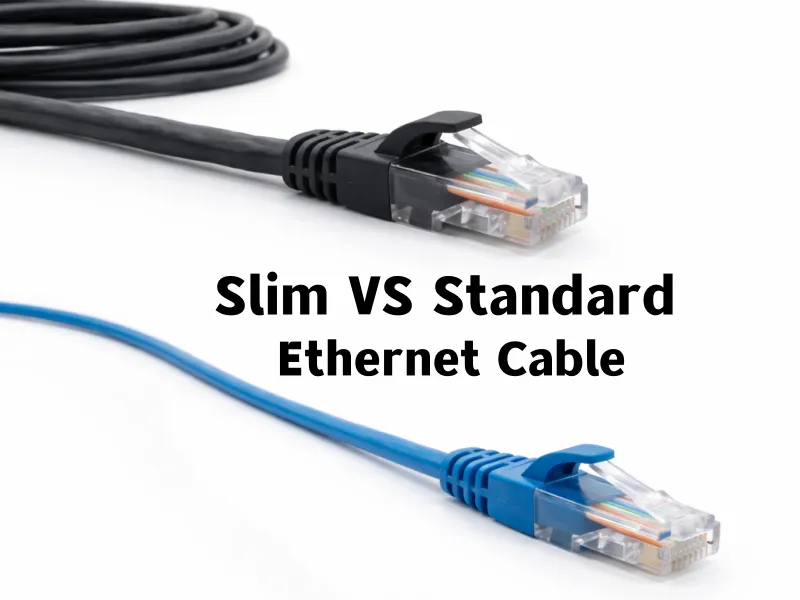
Vores salgsteam modtager en masse tilbud på Cat6- og Cat7-slanke kabler fra kunder, og de er altid bekymrede for kabelydelsen sammenlignet med almindelige Ethernet-kabler, når de bruger deres projekt. Lad os nu sammenligne disse slanke kabler og standard Ethernet-kabler og hjælpe dem med at beslutte, hvilken der passer bedst til deres netværksbehov.
Cat6 almindelige og Cat6 slim-kabler understøtter begge op til 10 Gbps, men de adskiller sig i ledermåler, diameter, fleksibilitet og PoE-kapacitet. Standard Cat6 bruger 24AWG ledere ved ~6 mm diameter, mens slanke Cat6 bruger 28AWG ved ~3,6 mm (tager 38 % mindre plads end 23~24AWG standardkabler), hvilket gør slanke kabler ideelle til pladsbegrænsede, kortvarige miljøer.
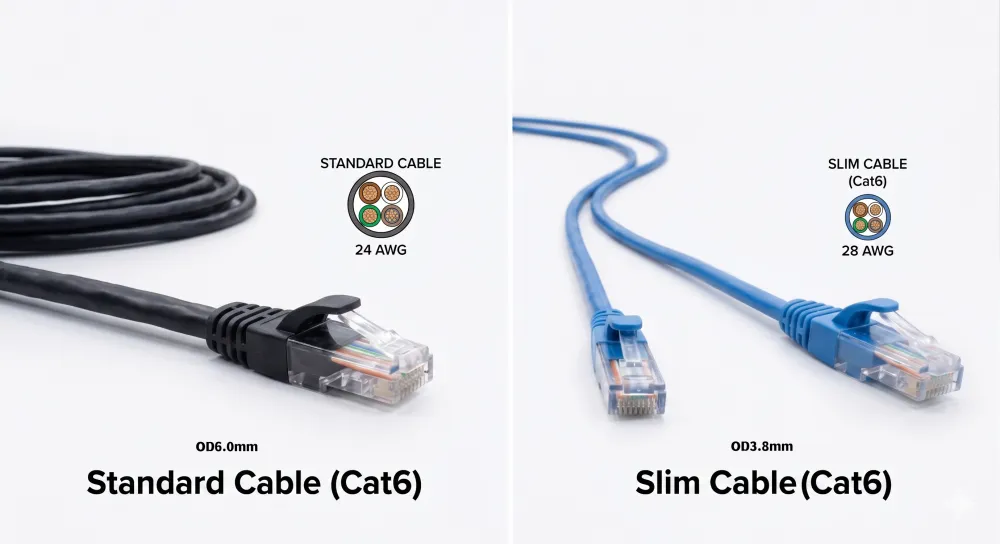
Valget mellem disse to kabler handler ikke om hastighed. Det handler om, hvor du installerer dem, hvor meget plads du har, og hvilke enheder du skal bruge til strøm. Lad mig guide dig gennem de vigtigste forskelle, så du kan foretage det rigtige opkald til dit næste projekt.
Hvad er Slim Ethernet-kabel?
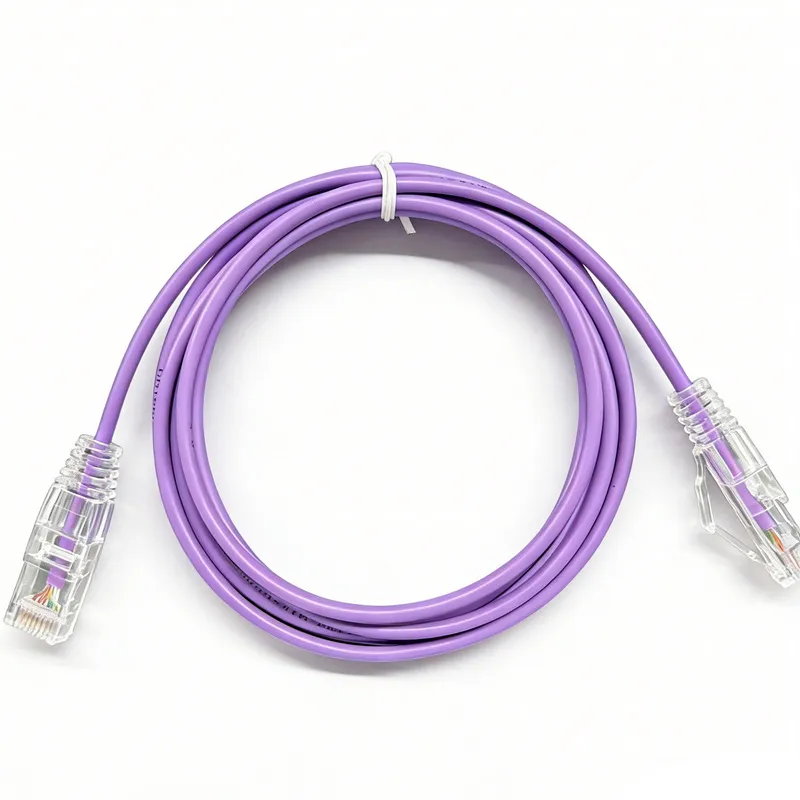
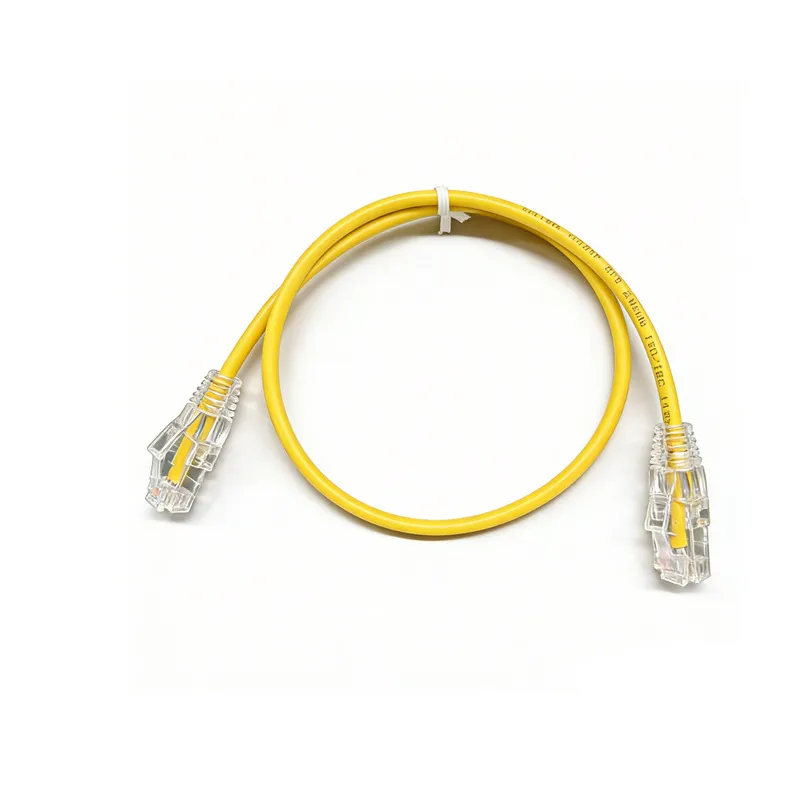
Slanke Ethernet-kabler er et kompakt, letvægtsalternativ til standardnetværkspatchkabler, med en reduceret ydre diameter - typisk mellem 3,5 mm og 4,0 mm - sammenlignet med 5,8-7,0 mm med konventionelle kabler. Bygget med tyndere 28 AWG-strengede ledere leverer de den samme Cat5e-, Cat6- eller Cat6A-netværksydelse, mens de fylder væsentligt mindre. Deres fleksible jakke gør dem ideelle til stram kabelstyring, patchpaneler med høj tæthed, serverracks, robot indeni, hjemmeopsætninger, og hvor som helst der er behov for et renere, mindre omfangsrigt kabeltræk.
Hvad er standard Ethernet-kabler?
Standard Ethernet-kabler er den mest udbredte type netværkskabel, med en konventionel ydre diameter på 5,8-7,0 mm med 23-26 AWG massive eller flertrådede kobberledere. Tilgængelige i kategorier, herunder Cat5e, Cat6, Cat6A, Cat7 og Cat8, understøtter de datatransmissionshastigheder fra 1 Gbps op til 40 Gbps, med båndbredder fra 100 MHz til 2000 MHz. Designet til permanente horisontale strækninger, væginstallationer og netværk til generelle formål, er de fortsat industristandarden for både bolig- og kommercielle strukturerede kabelsystemer verden over.
Mister du nogen signalkvalitet eller hastighed?
Når vi tester kabler på vores produktionslinje før afsendelse, er dette den største bekymring, købere rejser – og det er rimeligt.
Slanke Cat6-kabler leverer den samme maksimale hastighed på 10 Gbps som almindelige Cat6-kabler til korte ture. Deres tyndere 28AWG-ledere producerer dog højere DC-modstand, hvilket øger signaldæmpningen over længere afstande. For løb under 55 meter forbliver signalkvaliteten stort set identisk med standard Cat6.
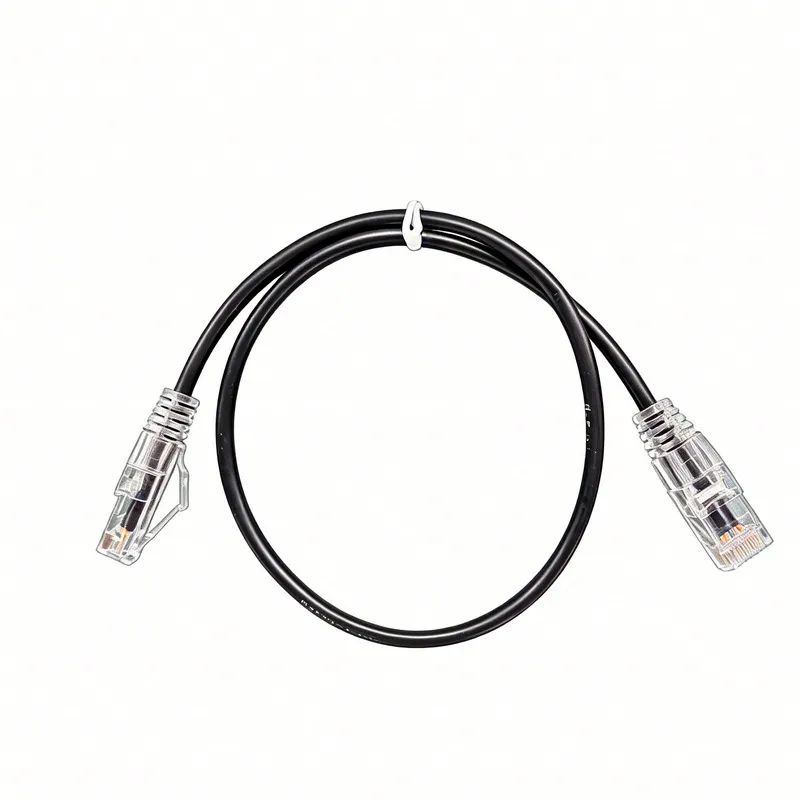
Hastighed er ikke problemet - afstand er
Lad mig være klar. Både standard Cat6 og slim Cat6 kabler understøtter 10GBase-T Ethernet. Det betyder 10 gigabit i sekundet. Råhastighedsvurderingen ændres ikke, når du bliver slank. Det, der ændrer sig, er, hvor langt signalet kan rejse, før det forringes.
Standard Cat6 kabler med 24AWG ledere har lavere DC modstand. Lavere modstand betyder, at signalet kan rejse længere uden at miste styrke. Slanke Cat6 kabler med 28AWG ledere har højere modstand. Det tyndere kobber kan simpelthen ikke bære signalet så effektivt over lange afstande.
Og for de fleste patch-ledningsapplikationer – tilslutning af en switch til et patchpanel eller en server til en top-of-rack switch – ser du på løb på 1 til 5 meter. På disse afstande er præstationsforskellen ubetydelig. Du vil ikke se noget målbart tab i hastighed eller signalkvalitet.
Hvor grænserne viser sig
Den virkelige bekymring opstår, når du skubber tynde kabler ud over 55 meter for 10 Gigabit Ethernet. På det tidspunkt bliver dæmpning en faktor. Standard Cat6-kabler klarer hele 55 meter kanallængde til 10GBase-T mere komfortabelt.
| Parameter | Standard Cat6 (24AWG) | Slim Cat6 (28AWG) |
| Max hastighed | 10 Gbps | 10 Gbps |
| Anbefalet maks. afstand (10GBase-T) | 55 meter | 55 meter (med forsigtighed) |
| DC modstand | Lavere (~8,0 Ω/100m) | Højere (~23,8 Ω/100m) |
| Signaldæmpning | Sænke | Højere over lange løb |
| Crosstalk Performance | Fremragende | Fremragende til korte løbeture |
Vores ærlige råd
Fra vores erfaring med at producere og teste begge kabeltyper til kunder i hele USA og Europa, er slanke Cat6-kabler absolut fine til korte patch-kørsler inde i stativer og mellem udstyr i nærheden. Men for rygradskabler, lange vandrette løb eller enhver situation, hvor du skubber afstandsgrænser, er standard Cat6 det sikreste bud. I højtydende miljøer, hvor hver decibel af signal betyder noget - som industriel automation eller missionskritiske datacentre - er standard Cat6 fortsat den rigtige vej. Det slanke kabel er UTP af natur, så dets interferensmodstand er ikke så stærk som skærmede standardoptioner. Husk det.
Når Slim giver perfekt mening
Moderne smarte industrier omfavner slanke kabler på spændende måder. Inde i robotarme, automatiserede vejledte køretøjer og kompakte IoT-kabinetter er slanke Cat6-kabler en perfekt pasform. De korte afstande, der er involveret, betyder nul ydeevnekompromis, og fleksibiliteten er en stor fordel ved stramme mekaniske samlinger.
Kabelplads
Vores ingeniørteam kørte side-by-side rack-konstruktioner sidste år - en med standard Cat6, en med slank - og alene den visuelle forskel var slående.
Slanke Cat6-patch-kabler kan spare op til 40 % af kabelbakke og stiplads sammenlignet med standard Cat6-kabler. Deres ~3,6 mm diameter versus ~6 mm betyder, at du kan placere næsten tre slanke kabler i den plads, der optages af to standardkabler, hvilket dramatisk forbedrer rackdensiteten og luftstrømmen.
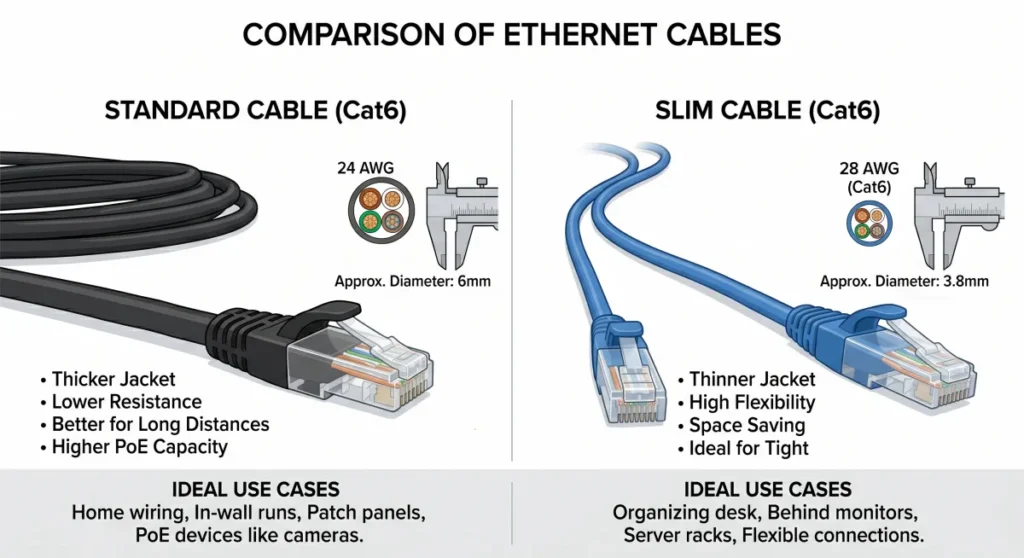
I et tætpakket serverrack er kabler en af de største forhindringer for korrekt luftstrøm. Varm luft bliver fanget. Kold luft kan ikke nå udstyret. Kølesystemer arbejder hårdere. Energiomkostningerne stiger.
Tynde Ethernet-kabler reducerer dette problem betydeligt. Med mindre kabelmasse, der blokerer luftstrømsvejene, cirkulerer kølig luft mere frit omkring switches, servere og patchpaneler. Vi har haft kunder i USA til at rapportere målbare temperaturfald i deres stativer efter skift til slanke patch-ledninger. Det oversættes direkte til lavere køleomkostninger og længere levetid for udstyret.
Kabelstyring bliver nemmere
Tyndere kabler er mere fleksible. De bøjer om hjørner uden at knække. De ruter gennem kabelstyringsarme og lodrette arrangører med mindre indsats. Dine teknikere bruger mindre tid på at bryde med stive kabler under installationer og bevægelser-tilføjer-ændringer.
Der er dog en afvejning, der er værd at nævne. Tyndere kabler kan være sværere at spore individuelt i ekstremt tætte bundter. God mærkning og farvekodning bliver afgørende. Vi anbefaler altid vores kunder at investere i et solidt mærkningssystem, når de implementerer slanke kabler i stor skala. Vi tilbyder tilpassede farvemuligheder og print-på-jakke-mærkning specifikt af denne grund.
Gentænk dit tilbehør
Skift til slanke kabler kan kræve opdatering af dit kabelstyringstilbehør. Standard kabelbindere og clips designet til 6 mm kabler kan være for løse til 3,6 mm slanke kabler. Velcroremme med mindre profil, slanke specifikke kabelstyringer og trækaflastning i passende størrelse patchpanel kan hjælpe dig med at få det fulde udbytte af pladsbesparelserne.
Slanke Cat6-kabler til højeffekt PoE-enheder
Når vi rådfører os med indkøbsledere, der planlægger PoE-implementeringer, dukker dette spørgsmål op i næsten hver samtale - og svaret kræver en vis nuance.
Slanke Cat6-kabler med 28AWG-ledere kan sikkert understøtte laveffekt PoE-applikationer under 30 watt (PoE og PoE+). De anbefales dog ikke til højeffekt PoE++ (Type 3 og Type 4) applikationer, der kræver 60W-100W, fordi deres tyndere ledere genererer mere varme og lider af større spændingsfald under kraftige elektriske belastninger.
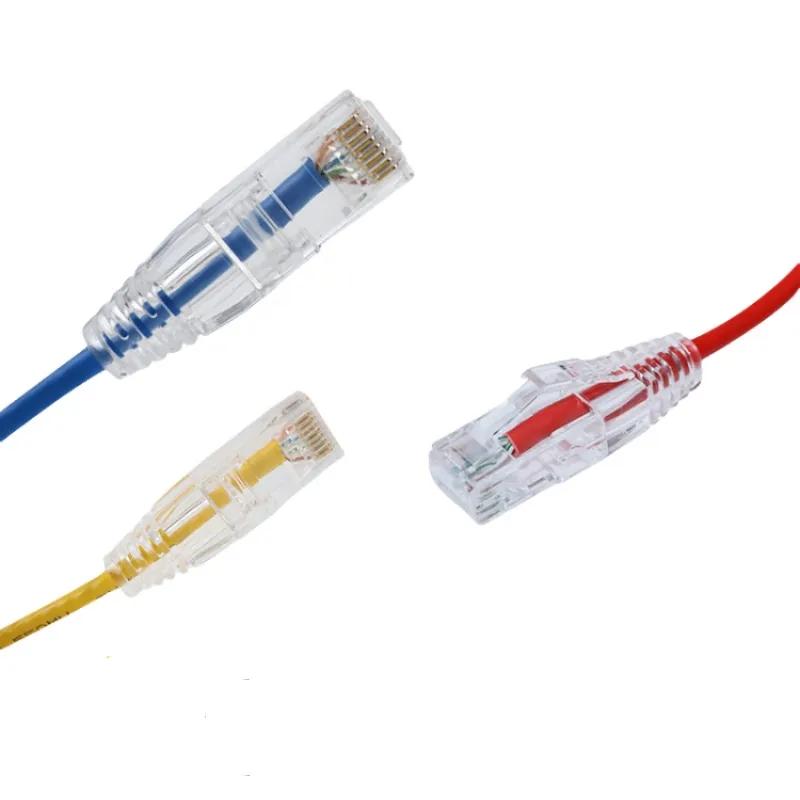
Forståelse af PoE-effektniveauer
Power over Ethernet er ikke one-size-fits-all. Der er flere PoE-standarder, og hver leverer forskellige wattniveauer. Ledermålet på dit kabel påvirker direkte, hvor meget strøm det sikkert kan bære.
| PoE standard | IEEE standard | Max Power hos PSE | Max Power hos PD | Velegnet til Slim Cat6? |
| PoE (type 1) | 802.3af | 15,4 W | 12,95 W | Ja |
| PoE+ (type 2) | 802.3at | 30 W | 25,5 W | Ja (med forsigtighed) |
| PoE++ (type 3) | 802.3bt | 60 W | 51 W | Nej - brug standard Cat6 |
| PoE++ (type 4) | 802.3bt | 100 W | 71,3 W | Nej - brug standard Cat6 |
Hvorfor tyndere ledere kæmper med høj effekt
Det kommer ned til grundlæggende fysik. En tyndere ledning har højere elektrisk modstand. Når du skubber betydelig strøm gennem en højmodstandsleder, sker der to ting. For det første får du spændingsfald - enheden i den fjerne ende modtager mindre spænding end det, der blev sendt. For det andet genererer kablet varme. I et bundt kabler inde i et lukket stativ, der opvarmer forbindelser.
Standard Cat6 kabler med 24AWG ledere har omtrent en tredjedel af DC-modstanden på 28AWG slanke kabler. Den forskel er overskuelig ved lave effektniveauer. Men ved 60 eller 100 watt bliver det et reelt problem. Overdreven varme kan forringe kabelkappen, påvirke nærliggende kabler i samme bundt og i ekstreme tilfælde skabe en brandrisiko.
Hvilke enheder falder ind under hver kategori?
PoE-enheder med lavt strømforbrug omfatter VoIP-telefoner, grundlæggende IP-kameraer, trådløse adgangspunkter og små IoT-sensorer. Disse trækker godt under 30 watt og fungerer helt fint med slanke Cat6-kabler.
Kraftige PoE-enheder omfatter PTZ-kameraer, videokonferencesystemer, højtydende trådløse adgangspunkter, digitale skilteskærme og tynde klientcomputere. Disse kræver ofte 30 til 60 watt eller mere. For disse enheder er standard Cat6 det rigtige valg.
Vores anbefaling
Ud fra vores produktions- og testerfaring råder vi altid kunderne til at kortlægge deres PoE-krav, før de vælger kabeltyper. Hvis din implementering primært er VoIP-telefoner og grundlæggende adgangspunkter, er slim Cat6 et godt valg - du får pladsbesparelser uden problemer med strømforsyningen. Men hvis du implementerer enheder med høj effekt, eller hvis du forventer at opgradere til udstyr med højere effekt i fremtiden, skal du investere i standard Cat6 til de specifikke kørsler. Mange af vores kunder bruger en blandet tilgang: slanke kabler til kun data og laveffekt PoE-forbindelser og standardkabler til højeffekt PoE-kørsler. Dette giver dem det bedste fra begge verdener.
Slanke Cat6-kabler, der er holdbare nok til netværksmiljøer med høj tæthed?
Vores kvalitetskontrolteam sætter hvert kabelbatch igennem træktest, bøjningstest og indføringscyklustest, før noget sendes - og vi bliver spurgt om slanke kablers holdbarhed mere end næsten noget andet emne.
Slanke Cat6 kabler er holdbare nok til kontrollerede højdensitetsmiljøer som datacentre, serverrum og kontornetværksskabe. Moderne fremstillingsteknikker, herunder sprøjtestøbte trækaflastningsstøvler og jakkematerialer af høj kvalitet, sikrer pålidelig ydeevne. De er dog ikke ideelle til udendørs brug, hårdhændet håndtering eller miljøer med betydelig fysisk stress.
Hvad "holdbar nok" faktisk betyder
Holdbarhed er ikke et enkelt mål. Det inkluderer trækstyrke, bøjningscyklusudholdenhed, forbindelsesfastholdelseskraft, jakkeslidstyrke og miljøtolerance. Lad mig opdele disse for slank versus standard Cat6.
Trækstyrke og fysisk stress
Standard Cat6 kabler med deres tykkere 24AWG ledere og større kappe modstår naturligvis mere trækkraft. Hvis et kabel sætter sig fast under installationen, eller hvis nogen ved et uheld rykker i det, er et standardkabel mere tilgivende. Slanke kabler kræver mere omhyggelig håndtering under installationen. Men når de først er installeret og klædt ordentligt på i et stativ, er den fysiske stress minimal. Kablerne sidder på plads og gør deres arbejde.
Bend Cycle Endurance
Tynde slanke Ethernet-kabler har faktisk en fordel her til visse applikationer. Deres mindre bøjningsradius - omkring 13 mm sammenlignet med 25 mm for standard - betyder, at de kan føres gennem snævrere stier uden at overskride deres bøjningsgrænser. I højdensitetsstativer, hvor kabler skal navigere rundt om forhindringer, reducerer denne fleksibilitet risikoen for knæk eller jakkeskade.
Konnektorkvalitet betyder mere, end du tror
Det svageste punkt på ethvert patchkabel er stikket. En dårligt støbt RJ45 stik vil fejle, uanset om kablet er slankt eller standard. På vores anlæg bruger vi sprøjtestøbte støvler med integreret trækaflastning på alle vores slanke patch-kabler. Dette beskytter termineringspunktet mod gentagne indføringer, utilsigtede træk og den naturlige belastning ved at blive ført gennem kabelstyring.
Miljøhensyn
Til indendørs, klimakontrollerede miljøer - som beskriver de fleste datacentre og serverrum - fungerer slanke Cat6-kabler pålideligt i årevis. Den kontrollerede temperatur og luftfugtighed, kombineret med korrekt kabelstyring, skaber ideelle forhold for slanke kabler.
Til udendørs løb, industrigulve, plenumrum eller hvor som helst kabler udsættes for UV-eksponering, fugt, ekstreme temperaturer eller kemisk eksponering, er standard Cat6-kabler med passende klassificeringer (CMR, CMP eller udendørs-klassificerede jakker) det bedre valg.
Bæredygtighedsvinkel
En ofte overset fordel ved slanke kabler er deres reducerede materialeindhold. Mindre kobber. Mindre jakkemateriale. Mindre emballagevægt. For store udrulninger, der involverer tusindvis af patch-kabler, er dette akkumuleret. Flere af vores europæiske kunder har specifikt valgt slanke kabler for at tilpasse sig deres grønne it-initiativer og krav til bæredygtighedsrapportering.
Bundlinjen om holdbarhed
Slanke Cat6 kabler er ikke skrøbelige. De er konstrueret til de miljøer, hvor de giver mening - højdensitetsreoler, korte patch-løb og kontrollerede indendørs rum. Behandl dem med rimelig omhu under installationen, brug korrekt kabelstyring, og de vil tjene dig pålideligt. Men bed dem ikke om at gøre, hvad standardkabler gør bedst: overleve hård håndtering, lange udendørs løb og højeffektapplikationer.
Konklusion
At vælge mellem almindelige Cat6 og Cat6 slim patch-kabler afhænger af dit specifikke miljø, strømbehov og afstandskrav - ikke hastighed. Brug slim for tæthed og fleksibilitet, standard for kraft og barske forhold.
Har du stadig brug for hjælp til dine netværksprojekter? Kontakt vores eksperter for tilpasset kabeltype, kategori og konfiguration til dit projekt nu!